Badger Super-Highway
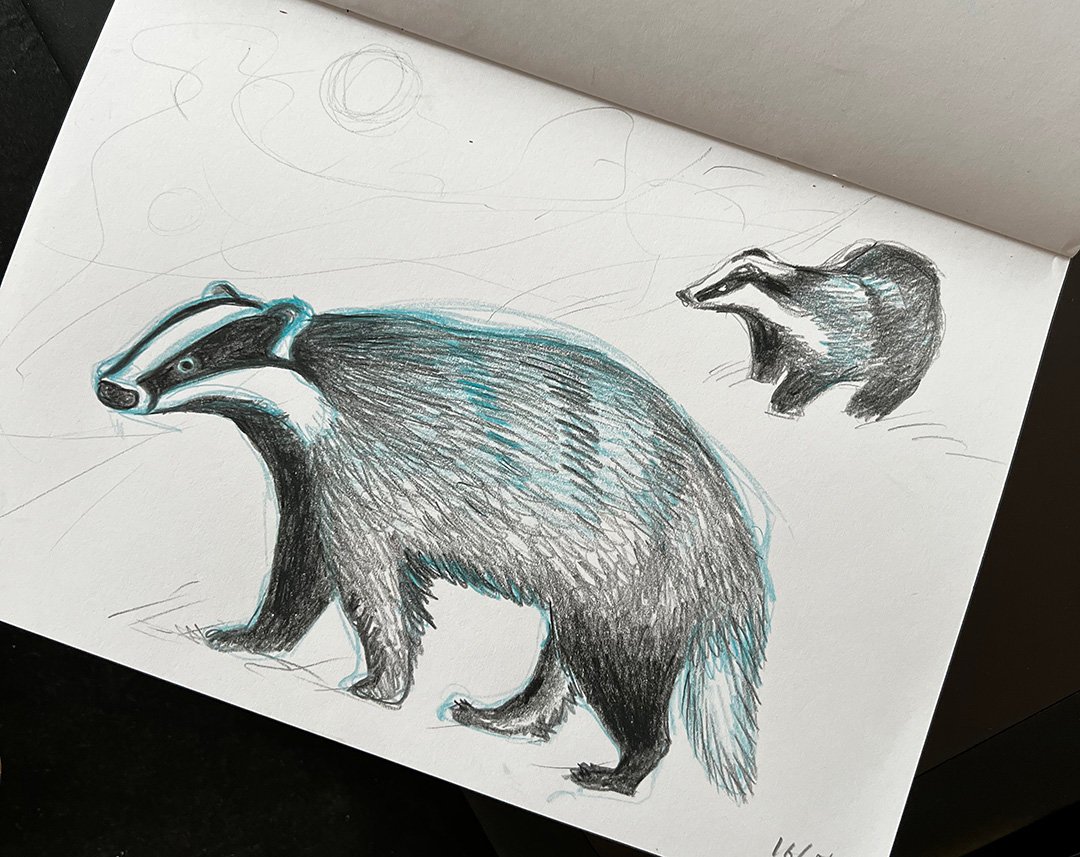
Since receiving a wildlife camera for my birthday earlier this year, I’ve been obsessed with badger watching. Who knew our garden is a superhighway for several badger clans? In the past, we have woken up to find our driveway verges pockmarked with snuffle-holes that appeared overnight- clues that point to badger activity. So we always knew that they came to visit.
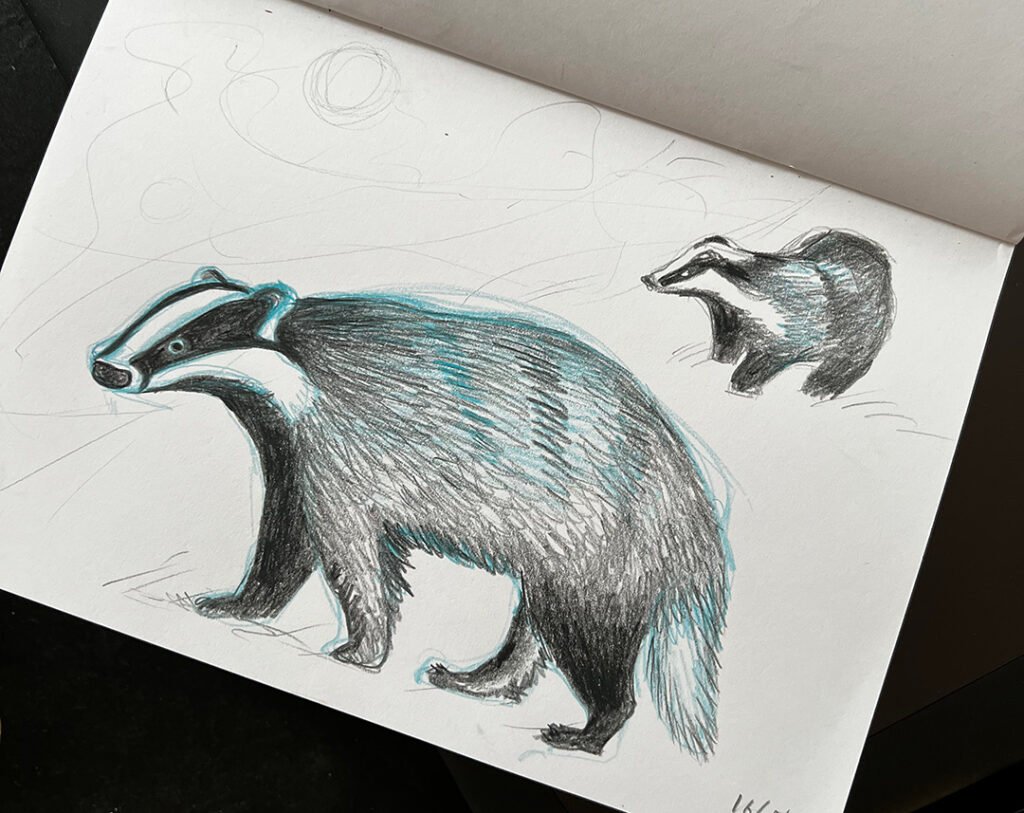
But badgercam has given us more insight. Just after sundown, they silently pad in through our entrance gate – sometimes alone, sometimes in groups of three. I’ve seen mum badger and two cubs trot by on video. The two youngsters have been caught on camera doing zoomies in the field adjoining our garden – pure joy to watch!
Accommodating badgers in the garden
Observations to date
They are sociable creatures but can get shirty. We witnessed a noisy scrap that went way beyond play acting. So loud it actually woke us in the middle of the night. The following morning’s footage showed serious biting, shaking, growling and yelping that lasted about a minute before the victim bolted with the aggressor in pursuit. Most likely a territorial clash between non-family members.
They habituate regular thoroughfares. Every evening they come in our front entrance onto our driveway. Avoiding the house, they hug the hedgerows to traverse the garden diagonally before scooching under the back gate to the field beyond, where they can easily access our neighbours’ wooded areas. Of course we can’t distinguish between individuals, so it’s unclear whether the same animals come every night. In the early hours of the morning, individuals regularly return from the field after a busy night of foraging and retire to the sett, wherever that may be.
Badger diet
I know from experience that badgers are opportunistic hunters, and recall an incident several years ago when my husband went out at dusk to lock up our chickens for the night, only to be confronted with a badger clutching a lifeless hen between its jaws. We haven’t kept chickens since.
Hedgehog predation
Sadly, the growing presence of badgers coincides with a sharp decline in our hedgehog population. A decade ago our dog would be out every night barking manically at a curled-up ball of prickles, and it wasn’t unusual to spot two of an evening. Since finding the spiny remains of a hollowed-out hedgehog in the garden a few years back, I’ve not encountered any – dead or alive.
Badgers, bees and wasps…
Even the pollinators are targeted by hungry badgers.* Every year without fail we come across at least one dug-out bee or wasp nest in the garden. A gaping hole of hive annihilation as deep as two feet. It seems the reward of succulent larvae is worth the effort and greater than the threat of multiple sting attacks. Evidently badger coats are a thick, furry mat of impenetrable armour. This year the bumblebees have cunningly nested in the safety of my polytunnel.
Badger snuffle holes
They love worms and leather jackets and, in the quest to find them, can leave snout-sized scoops scattered over the grass. Sometimes the odd scoop. Other times a smattering of multiple holes, usually just at the verges. Thankfully, we are not at all precious about our lawn.
Vulnerable on our roads
But tough and resilient as they are, badgers too fall prey to misfortune. Only last week we were distressed to find that one was killed on the road just outside our entrance. Strong claws, thick fur and sharp teeth are no match for a speeding 4×4. Could this be the ball of energy we watched tearing past our camera several months ago? A sad and poignant reminder to take it slow on country roads when driving at night.
NOTE: * Badgers are not the main cause of insect decline. Liberal use of fungicides, insecticides and pesticides, along with loss of suitable habitat, are the major culprits. See here for more info.